
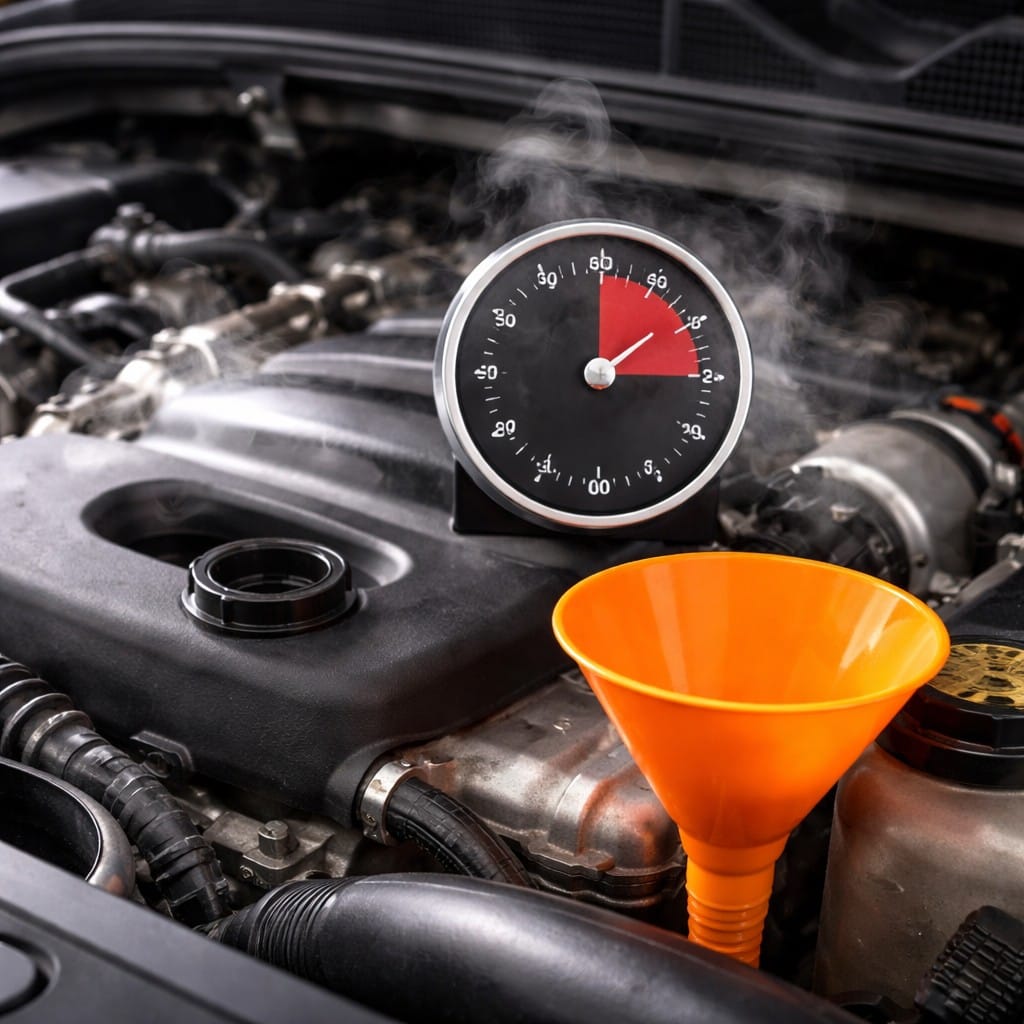
Adding oil to a hot engine can be dangerous and lead to inaccurate readings. Most experts recommend waiting 5 to 10 minutes after turning off the engine—long enough to cool slightly but still warm for proper oil flow. This ensures safety, accuracy, and engine longevity.
Key Takeaways
- Wait 5–10 minutes after driving: This allows surface heat to dissipate while keeping oil warm enough for accurate measurement.
- Never add oil to a smoking or extremely hot engine: Risk of burns or oil splatter is high; wait longer if needed.
- Check oil when the engine is off and on level ground: Ensures the dipstick reading reflects the true oil level.
- Use the right oil type and grade: Refer to your owner’s manual to avoid engine damage.
- Overfilling is as harmful as underfilling: Add oil gradually and recheck the level to prevent engine strain.
- Modern engines may have electronic oil monitors: These systems often require the engine to be off for several minutes before checking.
- Regular oil checks prevent major issues: Make it a habit during fuel stops or weekly maintenance.
📑 Table of Contents
Why Engine Temperature Matters When Adding Oil
You’ve just pulled into your driveway after a long drive, and you remember—your car’s oil level is low. You grab the oil jug and head to the engine bay, but pause. Should you add oil right away? The answer isn’t as simple as “yes” or “no.” It depends largely on how hot your engine is.
Engines generate intense heat during operation. When you shut off a running engine, especially after highway driving or towing, components like the cylinder heads, oil pan, and exhaust manifold can remain scorching hot for several minutes. Adding cold oil to a blazing-hot engine isn’t just uncomfortable—it can be dangerous. More importantly, it can lead to inaccurate oil level readings, which might cause you to overfill or underfill the system. Getting this wrong can result in reduced engine performance, increased wear, or even catastrophic failure over time.
So, how long should you wait? The general rule is to let the engine cool for 5 to 10 minutes after turning it off. This brief cooldown period allows surface temperatures to drop enough to prevent burns and oil splatter, while still keeping the oil warm enough to flow properly and give an accurate dipstick reading. Think of it like letting a baked potato sit for a few minutes before handling—it’s still warm, but no longer dangerously hot.
Understanding Engine Heat and Oil Behavior
How Heat Affects Motor Oil
Motor oil is designed to perform within a specific temperature range. When the engine is running, oil heats up and becomes thinner, allowing it to circulate efficiently through narrow passages and lubricate moving parts. However, when the engine is shut off, oil begins to cool and thicken. If you check the oil immediately after driving, the oil may not have fully drained back into the oil pan, leading to a falsely low reading.
Conversely, if you wait too long—say, several hours—the oil becomes cold and sluggish. While this won’t harm the engine, it can make the dipstick reading less reliable, especially in older vehicles with traditional dipsticks. Cold oil may not coat the dipstick evenly, giving you the impression that the level is lower than it actually is.
The Science Behind Thermal Expansion
Another factor to consider is thermal expansion. Metal engine components expand when heated and contract when cooled. This affects the internal volume of the oil pan and other oil reservoirs. When the engine is hot, the oil pan may appear fuller due to expansion, even if the actual oil volume hasn’t changed. Waiting a few minutes allows the metal to stabilize, giving you a more accurate measurement.
For example, imagine filling a glass with hot water and then immediately placing it in the freezer. The glass might crack due to rapid contraction. Similarly, pouring cold oil into a hot engine can cause thermal shock in extreme cases, though this is rare with modern oils and engines. Still, it’s better to err on the side of caution.
Recommended Cooling Time: 5 to 10 Minutes
Why This Window Works Best
The 5- to 10-minute rule strikes the perfect balance between safety and accuracy. In this time frame, the engine’s surface temperature drops significantly—enough to prevent burns or oil splatter—while the oil remains warm and fluid. This ensures that the oil has had time to drain back into the oil pan, giving you a true reading on the dipstick.
Let’s say you’ve just driven 30 minutes on the highway. The engine is hot, but not glowing. You turn it off and wait eight minutes. During this time, the coolant system continues to circulate residual heat, and the oil begins to settle. After eight minutes, it’s safe to open the hood, locate the dipstick, and check the oil level. If it’s low, you can add oil confidently, knowing the reading is reliable.
Adjusting for Driving Conditions
Not all drives are created equal. If you’ve been idling in traffic for an hour, the engine may not be as hot as after a high-speed run. In such cases, you might only need to wait 3 to 5 minutes. On the other hand, if you’ve been towing a trailer or driving aggressively, the engine could take 15 minutes or more to cool sufficiently.
Use your senses as a guide. If the engine cover or nearby components are too hot to touch comfortably, wait a bit longer. A simple trick is to place the back of your hand near the oil filler cap—if it feels uncomfortably warm, give it more time. Safety always comes first.
Safety First: Avoiding Burns and Oil Splatter
The Dangers of Hot Oil
Motor oil can reach temperatures over 200°F (93°C) during normal operation. At these temperatures, it can cause serious burns if it comes into contact with your skin. Additionally, pressurized steam or trapped air in the engine can cause oil to splatter when the cap is removed, especially if the engine was recently under load.
We’ve all heard stories of people getting splashed with hot oil while checking levels—don’t become one of them. Even a small splash can result in painful burns, particularly on the face or hands. Always wear gloves and safety glasses when working under the hood, especially if you’re unsure of the engine’s temperature.
Best Practices for Safe Oil Checks
To minimize risk, follow these simple steps:
- Park on a level surface and turn off the engine.
- Wait at least 5 minutes—longer if the engine was under heavy load.
- Open the hood and locate the oil dipstick and filler cap.
- Use a rag or glove to remove the dipstick, wipe it clean, reinsert it fully, and then pull it out to read the level.
- If adding oil, pour slowly and check the level frequently to avoid overfilling.
Remember, rushing increases the chance of mistakes. Take your time, stay safe, and protect both yourself and your engine.
Checking Oil Levels: Step-by-Step Guide
How to Read the Dipstick Accurately
Even with the right cooling time, checking oil isn’t just about pulling the dipstick and glancing at it. To get an accurate reading, follow these steps:
- Ensure the car is on level ground. A tilted surface can give a false reading.
- Turn off the engine and wait 5–10 minutes.
- Pull out the dipstick, wipe it clean with a lint-free cloth, and reinsert it fully.
- Pull it out again and observe the oil level. It should be between the “MIN” and “MAX” marks.
- If it’s near or below “MIN,” add oil gradually—no more than half a quart at a time—and recheck.
Pro tip: Check the oil color and consistency. Fresh oil is amber and translucent. If it’s dark, gritty, or smells burnt, it’s time for an oil change—not just a top-up.
Modern Cars and Electronic Oil Monitors
Many newer vehicles no longer have traditional dipsticks. Instead, they use electronic oil level sensors and dashboard displays. In these cars, the system often requires the engine to be off for a specific period—usually 3 to 5 minutes—before it can provide an accurate reading.
Consult your owner’s manual for exact instructions. Some systems even require you to turn the ignition to “on” without starting the engine to activate the sensor. Skipping this step can result in an incorrect reading, so always follow the manufacturer’s guidelines.
Common Mistakes to Avoid
Adding Oil Too Soon
One of the most common errors is adding oil immediately after driving. This can lead to overfilling because the oil hasn’t had time to drain back into the pan. Overfilled engines can suffer from increased pressure, foaming, and reduced lubrication efficiency—leading to premature wear.
Ignoring the Owner’s Manual
Every engine is different. Some manufacturers recommend waiting longer than 10 minutes, especially in high-performance or turbocharged engines. Always refer to your vehicle’s manual for specific guidance. It’s the best source of truth for your car’s unique needs.
Using the Wrong Oil
Adding the incorrect oil type—such as using conventional oil in a car that requires synthetic—can harm your engine. Check the viscosity grade (e.g., 5W-30) and specifications (like API or ILSAC ratings) listed in your manual. Using the wrong oil can void warranties and reduce engine life.
Conclusion: Patience Pays Off
Waiting a few extra minutes before adding oil might seem like a small thing, but it makes a big difference in engine health and safety. By allowing the engine to cool slightly, you protect yourself from burns, ensure accurate oil level readings, and prevent overfilling. It’s a simple habit that pays dividends in the long run.
Remember: 5 to 10 minutes is the sweet spot for most vehicles. Use this time to gather your tools, check your owner’s manual, and prepare for a safe and effective oil check. Your engine—and your peace of mind—will thank you.
Frequently Asked Questions
Can I add oil immediately after turning off the engine?
It’s not recommended. Adding oil right after driving can lead to inaccurate readings and potential burns. Wait at least 5 minutes to allow the oil to settle and surface heat to dissipate.
How long should I wait if I’ve been driving aggressively?
If you’ve been towing, racing, or driving in hot weather, wait 10 to 15 minutes. High engine loads generate more heat, so extra cooling time ensures safety and accuracy.
Is it okay to check oil when the engine is completely cold?
Yes, but the reading may be slightly less accurate. Cold oil is thicker and may not coat the dipstick evenly. For best results, check when the engine is warm but not hot.
What happens if I overfill the engine with oil?
Overfilling can cause oil foaming, reduced lubrication, and increased pressure, which may damage seals and gaskets. Always add oil gradually and recheck the level.
Do electric cars need oil changes?
Most fully electric vehicles don’t have internal combustion engines and therefore don’t require motor oil. However, some hybrids do—check your owner’s manual.
Can I use any oil brand in my car?
No. Always use the oil type and viscosity specified in your owner’s manual. Using the wrong oil can reduce performance and void your warranty.