
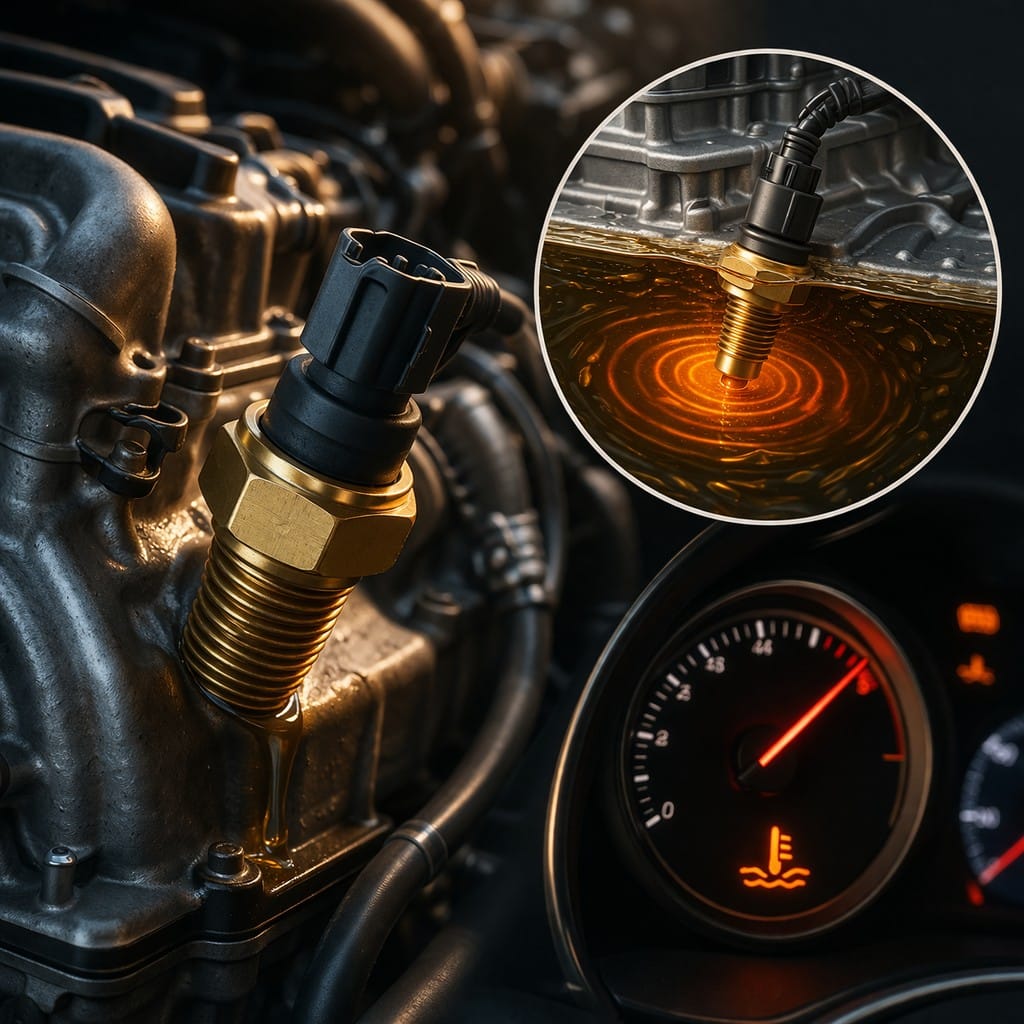
The engine oil temperature sensor monitors oil heat levels to protect your engine from overheating and wear. It ensures optimal lubrication, improves performance, and alerts you to potential issues before they become serious.
Key Takeaways
- Monitors Oil Temperature: The sensor tracks how hot the engine oil gets, sending real-time data to the engine control unit (ECU).
- Prevents Engine Damage: High oil temps can break down lubrication, leading to increased friction and component wear.
- Improves Performance: Helps the ECU adjust fuel mixture, timing, and cooling systems for better efficiency.
- Enhances Safety: Alerts drivers via dashboard warnings if oil overheats, preventing catastrophic engine failure.
- Supports Modern Engines: Especially important in turbocharged, high-performance, and diesel engines that run hotter.
- Requires Regular Checks: Like all sensors, it can fail over time and should be inspected during routine maintenance.
- Easy to Replace: Most sensors are accessible and affordable, making repairs straightforward for DIYers.
📑 Table of Contents
What Is an Engine Oil Temperature Sensor?
An engine oil temperature sensor is a small but critical component in your vehicle’s engine management system. Its job is simple: measure the temperature of the engine oil and send that data to the engine control unit (ECU). Think of it as your engine’s internal thermometer—keeping tabs on one of the most vital fluids under the hood.
Unlike the coolant temperature sensor, which monitors the engine’s cooling system, the oil temperature sensor focuses solely on the oil. This distinction matters because oil temperature can differ significantly from coolant temperature, especially during cold starts, heavy loads, or high-performance driving. For example, during a spirited drive on a mountain road or towing a trailer, oil can heat up faster than coolant, and the ECU needs accurate oil temp data to respond correctly.
Most modern vehicles—especially performance cars, trucks, and diesels—come equipped with an oil temperature sensor. Some high-end models even have a dedicated gauge on the dashboard, while others rely on warning lights or digital displays. Whether visible or not, this sensor plays a behind-the-scenes role in keeping your engine running smoothly.
How Does the Engine Oil Temperature Sensor Work?
At its core, the engine oil temperature sensor is a type of thermistor—a device whose electrical resistance changes with temperature. Most oil temp sensors are negative temperature coefficient (NTC) thermistors, meaning their resistance decreases as temperature rises.
Here’s how it works in practice: The sensor is threaded into the engine block or oil pan, usually near the oil filter or gallery, where it’s constantly bathed in engine oil. As the oil heats up, the sensor detects the change and alters its resistance. This change is measured by the ECU, which interprets it as a temperature reading.
The ECU then uses this data to make real-time adjustments. For instance, if oil temperatures climb too high, the ECU might enrich the fuel mixture to cool combustion chambers, activate cooling fans earlier, or even trigger a warning light on your dashboard. In some performance vehicles, the system may also adjust turbo boost levels or transmission shift points to reduce engine stress.
It’s a continuous feedback loop: the sensor reads, the ECU reacts, and the engine adapts. This dynamic control helps maintain optimal operating conditions, even under demanding circumstances.
Types of Oil Temperature Sensors
Not all oil temperature sensors are the same. The most common types include:
– Thread-in Sensors: These screw directly into the engine block or oil filter housing. They’re durable and provide accurate readings due to direct contact with oil.
– In-line Sensors: Installed in the oil line, often used in racing or high-performance applications where precise monitoring is critical.
– Integrated Sensors: Some vehicles combine the oil temperature sensor with the oil pressure sensor into a single unit, saving space and simplifying wiring.
Each type has its pros and cons, but all serve the same purpose: delivering reliable temperature data to protect your engine.
Why Oil Temperature Matters for Engine Health
Engine oil is the lifeblood of your engine. It lubricates moving parts, reduces friction, cools critical components, and helps clean internal surfaces. But oil only works effectively within a specific temperature range—typically between 180°F and 220°F (82°C to 104°C) for most engines.
When oil gets too cold—like during a winter morning start—it becomes thick and sluggish, struggling to flow quickly through narrow passages. This delays lubrication, increasing wear on bearings, camshafts, and pistons. That’s why many modern cars use synthetic oils that flow better at low temperatures.
On the flip side, when oil gets too hot—above 250°F (121°C)—it begins to break down. Its viscosity drops, meaning it becomes too thin to maintain a protective film between metal surfaces. This leads to metal-on-metal contact, accelerated wear, and even scuffing or scoring of engine components.
High oil temperatures also accelerate oxidation, forming sludge and varnish that clog oil passages and reduce efficiency. In extreme cases, overheated oil can lose its additive package, leaving the engine unprotected.
This is where the oil temperature sensor becomes essential. By monitoring oil heat, it helps the ECU take preventive action—like increasing coolant flow or reducing engine load—before damage occurs.
Real-World Example: Towing and High Loads
Imagine you’re towing a heavy trailer up a steep hill on a hot summer day. The engine is working hard, generating more heat than usual. Without an oil temperature sensor, the ECU wouldn’t know that oil temps are climbing toward dangerous levels. But with the sensor in place, the system can respond by engaging auxiliary coolers, adjusting fuel delivery, or even prompting you to ease off the throttle.
In racing or track driving, oil temperature sensors are even more critical. Drivers rely on real-time data to manage engine stress and avoid overheating during prolonged high-RPM operation.
Signs of a Failing Oil Temperature Sensor
Like any electronic component, the oil temperature sensor can fail over time. When it does, it can cause a range of issues—some subtle, others more obvious. Here are common symptoms to watch for:
– Inaccurate Gauge Readings: Your oil temp gauge may show erratic values, stick at one point, or read abnormally high or low.
– Check Engine Light: A faulty sensor often triggers a diagnostic trouble code (DTC), such as P0195 (Engine Oil Temperature Sensor Circuit Malfunction).
– Poor Engine Performance: If the ECU receives incorrect data, it may make poor decisions—like running too rich or too lean—leading to rough idling, hesitation, or reduced power.
– Overheating Warnings: Even if the engine isn’t actually overheating, a bad sensor might falsely trigger a warning light.
– Reduced Fuel Efficiency: Incorrect temperature readings can cause the ECU to overcompensate, burning more fuel than necessary.
If you notice any of these signs, it’s wise to have the sensor checked. A simple diagnostic scan can confirm whether the sensor is sending the right signal.
DIY Diagnosis Tips
You don’t always need a mechanic to test your oil temperature sensor. With a multimeter, you can check its resistance at different temperatures. Compare your readings to the manufacturer’s specifications—usually found in a service manual. If the resistance doesn’t change with temperature, or if it’s out of range, the sensor is likely faulty.
Also, inspect the sensor’s wiring and connector for corrosion, fraying, or loose connections. Sometimes, the problem isn’t the sensor itself but the electrical connection.
Maintenance and Replacement
The good news? Replacing an engine oil temperature sensor is usually straightforward and affordable. Most sensors cost between $20 and $80, depending on the vehicle, and can be replaced in under an hour with basic tools.
When to Replace the Sensor
There’s no set mileage for replacing the oil temperature sensor—it depends on wear and performance. However, consider replacement if:
– You’re experiencing symptoms of failure.
– The sensor is over 10 years old.
– You’re performing major engine work and want to ensure all sensors are in good condition.
– You drive in extreme conditions (e.g., frequent towing, racing, or hot climates).
Step-by-Step Replacement Guide
1. Let the Engine Cool: Never work on a hot engine. Allow it to cool completely to avoid burns.
2. Locate the Sensor: Refer to your vehicle’s service manual. It’s usually near the oil filter or on the engine block.
3. Disconnect the Battery: For safety, disconnect the negative terminal.
4. Remove the Electrical Connector: Gently unplug the sensor’s wiring harness.
5. Unscrew the Sensor: Use the correct socket or wrench to remove it. Be careful not to damage the threads.
6. Install the New Sensor: Apply a small amount of thread sealant if recommended, then screw in the new sensor by hand before tightening.
7. Reconnect Everything: Plug in the connector and reconnect the battery.
8. Test the System: Start the engine and check for leaks or warning lights.
Always use a high-quality replacement sensor from a reputable brand to ensure accuracy and longevity.
The Role of Oil Temperature in Modern Engine Design
As engines become more powerful and efficient, they also run hotter. Turbocharging, direct injection, and tighter tolerances all contribute to increased thermal stress. In this environment, precise oil temperature management is more important than ever.
Modern engine control systems rely heavily on sensor data to optimize performance and emissions. The oil temperature sensor feeds into algorithms that manage everything from cold-start enrichment to thermal management strategies. For example, some vehicles use oil temperature data to decide when to activate cylinder deactivation or start-stop systems.
In hybrid and electric vehicles, oil temperature sensors are also used in range extenders or auxiliary power units, ensuring these smaller engines operate efficiently.
Moreover, performance enthusiasts and tuners often install aftermarket oil temperature gauges and sensors to monitor engine health during aggressive driving. This real-time feedback allows for safer tuning and better engine protection.
Conclusion
The engine oil temperature sensor may be small, but its role is huge. By continuously monitoring oil heat, it helps protect your engine from wear, overheating, and performance issues. Whether you’re commuting daily, towing a trailer, or pushing your car on the track, this sensor ensures your engine stays within safe operating limits.
Understanding how it works—and recognizing the signs of failure—can save you from costly repairs down the road. Regular maintenance, prompt replacement when needed, and using quality parts are simple steps that go a long way in preserving engine health.
So next time you start your car, remember: there’s a tiny sensor working quietly under the hood, keeping your engine cool, clean, and running strong.
Frequently Asked Questions
What happens if the oil temperature sensor fails?
If the sensor fails, the ECU may receive incorrect temperature data, leading to poor engine performance, reduced fuel efficiency, or false overheating warnings. In some cases, it can trigger the check engine light or cause the engine to run in a protective “limp mode.”
Can I drive with a bad oil temperature sensor?
You can drive short distances, but it’s not recommended. A faulty sensor can lead to improper engine management, increased wear, or even overheating. It’s best to replace it as soon as possible.
How often should the oil temperature sensor be replaced?
There’s no fixed interval. Replace it only if it fails or shows signs of malfunction. However, consider inspection during major services, especially if you drive in extreme conditions.
Is the oil temperature sensor the same as the coolant temperature sensor?
No. The coolant sensor monitors the engine’s cooling system, while the oil temperature sensor measures the actual temperature of the engine oil. They serve different purposes and are often located in different parts of the engine.
Can a bad oil temperature sensor cause overheating?
Not directly, but it can prevent the ECU from taking corrective action. For example, if the sensor reads low when oil is actually hot, the engine may not activate cooling systems in time, leading to overheating.
Do all cars have an oil temperature sensor?
Not all. Many older or base-model vehicles only have a coolant temperature sensor. However, most modern performance cars, trucks, and diesels include an oil temperature sensor for better engine management.